Home Security 101: the difference between an alarm system, an armed response and a monitoring service
Here is a question that gets asked constantly on suburb WhatsApp groups, across fences, and in the comments on every South African home improvement page: “But do I need an alarm, a monitoring service, or an armed response?”
And almost every time someone confidently gives the wrong answer, and the confusion carries on.
The truth is that most people just do not know what each of these things does, how they work together, or why confusing them could leave a very expensive gap in a home’s security.
This is the clear-headed explanation South African homeowners have needed for a long time.
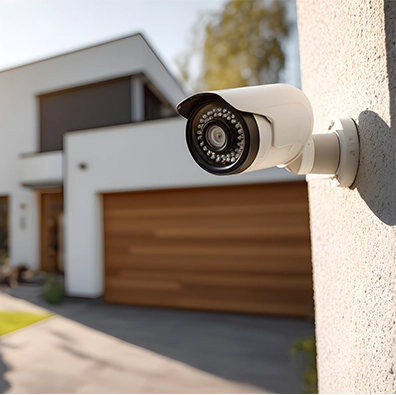
An alarm system is your first line of defence
The most commonly used home security device is the humble alarm.
It is the physical equipment installed in and around a home that detects unauthorised entry, motion, or tampering. This includes sensors on doors and windows, passive infrared motion detectors inside rooms, outdoor beams, panic buttons, and a central control panel that ties it all together.
When a sensor is triggered, the alarm system does one thing: it shrieks.
It sounds a siren, flashes a strobe, and/or sends an alert. What happens next depends entirely on whether that alarm is connected to anything else.
A standalone alarm system with no outside connection will make noise. That is its job. Whether anyone responds to that noise is a different matter entirely.
Modern systems, like those built on the Ajax platform, go significantly further.
Ajax devices communicate via encrypted radio frequencies, include built-in tamper protection, and maintain functionality during power outages and signal jamming attempts.
In a South African context, where blackouts and network interference are everyday realities, this kind of resilience is a baseline requirement.
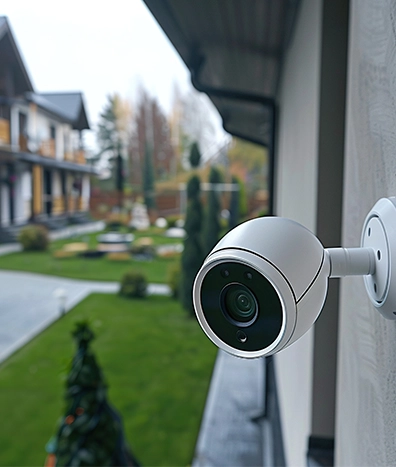
A monitoring service helps you keep watch
A monitoring service is the link between an alarm going off and a human being made aware of it.
When a property is connected to a control room, any alarm-system trigger sends an alert to a team of operators who monitor 24 hours a day.
Those operators then follow a protocol.
They may try to contact the homeowner, verify whether the alert is genuine, and if necessary, dispatch a response vehicle. Some monitoring services also support video verification, which means operators can view a live or captured image from a camera to confirm whether an actual intrusion is taking place before anyone is sent out.
This matters enormously.
South Africa’s false alarm rate is one of the highest in the world, and repeated unnecessary dispatches drive up costs and erode trust in the system.
Monitoring that includes visual verification helps to cut through the noise and make sure real threats receive real responses.
Armed response is your physical answer to a verified threat
Armed response is exactly what it sounds like. Armed response is the boots-on-the-ground component of a security setup.
It is a team of trained, registered security officers in marked vehicles who physically attend a property when an alarm is triggered and verified.
In South Africa, armed response officers must be registered with PSIRA, the Private Security Industry Regulatory Authority, which sets the minimum training and conduct standards for the industry.
Reputable companies go well beyond those minimums.
Response times vary considerably depending on the area, the company, and the time of day.
Urban suburbs in Johannesburg, Cape Town and Pretoria tend to see faster average response times, but no armed response company can guarantee a specific window.
This is why the alarm system and monitoring layer matter so much. The faster a threat is detected and verified, the faster a response can be dispatched.
How they work together
Think of it as three interlocking layers.
The alarm system detects. The monitoring service verifies and communicates. The armed response attends and acts.
Remove any one of those layers and the system becomes meaningfully weaker.
A quality alarm system with no monitoring means noise and hope. A monitoring service with no reliable alarm hardware means missed or delayed alerts. Armed response with no verified trigger system means slow, reactive call-outs rather than rapid, informed ones.
Homeowners who understand this are far better placed to ask the right questions when sourcing equipment, choosing a monitoring provider, or evaluating an armed response company.
Knowledge is the starting point for every good security decision, and the second good security decision you can make is to contact us.
Frequently Asked Questions
What is the difference between a home alarm system and a monitoring service in South Africa?
A home alarm system is the hardware that detects intrusions, such as sensors, motion detectors and a control panel. A monitoring service is a 24-hour control room that receives alerts from that system and responds accordingly. The two work together but are separate services that are often sold independently.
Do I need armed response if I already have an alarm system?
An alarm system alone only produces a siren or alert. Without a monitoring service and armed response connection, no trained person is automatically notified or dispatched when it triggers. Armed response adds the physical, in-person component that transforms a deterrent into a genuine intervention capability.
How does load shedding affect home alarm systems in South Africa?
Traditional alarm systems rely on mains power with a battery backup, which can deplete during extended outages. More advanced systems, such as those using the Ajax platform, are designed with extended battery life, wireless communication, and built-in anti-jamming technology to maintain full functionality throughout load shedding cycles.
What is PSIRA and why does it matter for home security in South Africa?
PSIRA stands for the Private Security Industry Regulatory Authority. It is the statutory body that regulates all private security companies and officers in South Africa. Any armed response company or security officer operating without PSIRA registration is doing so illegally. Always confirm PSIRA registration before signing any security contract.
What should I look for when choosing a home security system in South Africa?
Prioritise systems that offer wireless encrypted communication, tamper detection, battery backup that performs through load shedding, and compatibility with a monitoring service that includes visual alarm verification. The quality of the hardware determines the reliability of everything that follows it in the security chain.