Access Control 101: A Beginner's Guide for South African Homes and Businesses
A gate, a wall, a lock, perhaps a dog that barked at strangers, was once considered enough.
But crime and security have become a lot more sophisticated, and today it is not simply about keeping people out; it is about knowing, with some certainty, exactly who is coming in.
This is what an access control system does. It replaces guesswork with control, deciding who may pass through a gate, door or perimeter, when they may do so, and how.
Whether through a keypad, a biometric scanner or a smart intercom, the system takes on the task of watching so that you do not have to, all day, every day, including the hours nobody thinks to check.
Which Type of Access Control Suits Your Home or Business?
The right access control system depends on how many people need daily access, how much day-to-day management you are prepared to take on, and whether the property is a single home, a complex or a small business.
A young family in a standalone house has very different needs to a body corporate managing 40 units, and a small business owner locking up a shopfront has different needs again.
This is how to decide which system would be best for your needs:
|
System type |
How it works |
Best suited to |
Example use case |
|---|---|---|---|
|
Keypad or PIN entry |
A numeric code opens the gate or door |
Single homes, domestic staff access |
A code shared with a gardener that changes monthly |
|
Card or fob (tag) reader |
A physical card or tag is tapped or swiped |
Complexes, estates, small offices |
Residents each carry a personal tag for the boom gate |
|
Biometric readers |
Fingerprint or facial recognition confirms identity |
Businesses, high security homes |
Staff clocking in without a card that can be lost or shared |
|
Smartphone app or Bluetooth |
A phone app remotely opens a gate or door |
Tech-comfortable households, rentals |
A landlord granting temporary access to a cleaner |
|
Remote gate motor with intercom |
A remote or video intercom confirms visitors before entry |
Standalone homes, small estates |
Verifying a delivery driver before opening the gate |
|
Boom gates or turnstiles |
Vehicle or pedestrian counting with automated barriers |
Businesses, estates, parking areas |
Controlling vehicle flow at an estate entrance |
Why Access Control is More Important Now than it was Five Years Ago
Access control matters more now because housebreaking remains the single most common crime experienced by South African households, with an estimated 1.5 million incidents recorded in the 2024/25 period, affecting 5.7% of all households nationally.
Perimeter gates and walls are consistently the most commonly compromised entry point, ahead of doors and windows.
This points to a clear and specific weakness, that the perimeter itself, not the interior of the home, is where incidents begin.
The pattern holds true for complexes and estates too.
Properties with actively managed access control and trustworthy oversight of who enters consistently show lower incident rates than those relying on walls and booms alone.
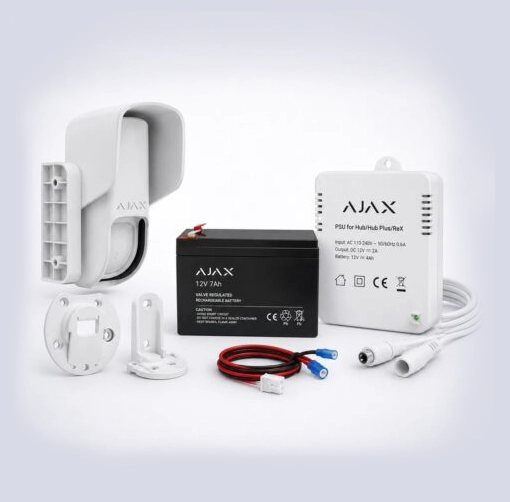
A wall stops nobody who is let in through the gate by mistake or by habit.
But a well-designed access control system closes that specific gap, whether it protects one family, a whole estate or a small business premises.
Choosing a system is just one part of the picture.
Installing and maintaining it correctly is the part that actually keeps a household or business protected over time, which is where working with a properly qualified security provider such as SecurityEO is the best option, as we can match the system to the property rather than selling a one-size-fits-all box.
Frequently Asked Questions
What is access control and how does it work in a South African home?
Access control is any system that manages and verifies who can enter a property, using a keypad code, a card, a fingerprint or a smartphone app instead of relying on a gate or lock alone. It works by confirming identity before granting entry, rather than after something has already gone wrong.
Which type of access control is best for a small business in South Africa?
A card or fob system paired with a logged entry record generally suits small businesses best, since it tracks exactly who entered and when without the daily management burden of a full biometric setup. Businesses with higher security needs, such as those handling cash or stock, often add biometric readers for staff areas.
Is biometric access control reliable for South African homes?
Yes, modern fingerprint and facial recognition readers are considered reliable for residential use, and they remove the risk of a lost card or a shared code being passed on. They are most cost effective for households or complexes with a fixed group of regular users.
How much does access control cost to install in South Africa?
Cost depends entirely on the system type and property size, ranging from a simple keypad costing a few thousand rand to a full biometric and boom gate setup for an estate costing considerably more. A proper site assessment gives an accurate quote rather than a generic price.
Can access control be added to an existing gate or security system?
Yes, most keypad, card and biometric access control systems can be retrofitted to an existing gate motor, intercom or alarm system rather than requiring a full replacement. This makes upgrading a weak perimeter one of the more affordable security improvements a household can make.